
📊 Crypto Trading Signals - October 17, 2025

📊 Crypto Trading Signals
October 17, 2025
Squid Digest - AI-powered insights for crypto natives
📊 Crypto Trading Signals - October 17, 2025
🔥 Top Stories




🎯 Trading Signals
Lead Story Deep Dive
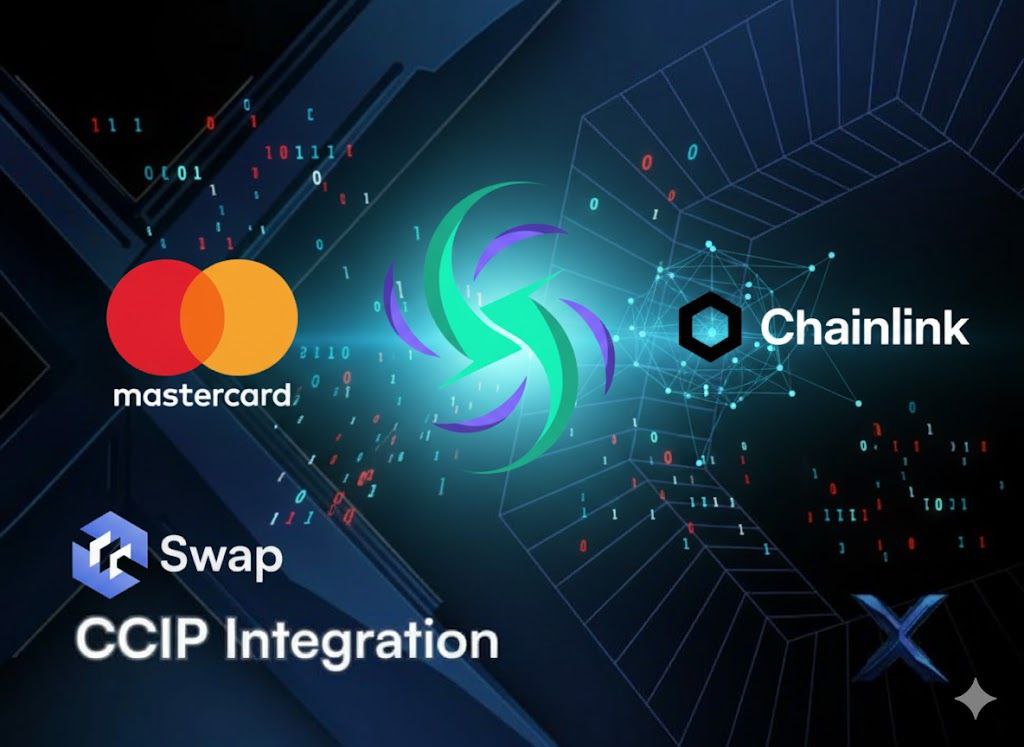
Mastercard, Chainlink, Swapperfinance, and XSwap: The “Onchain Everything” Gambit
Let’s cut through the corporate-speak: this isn’t just about “bringing 3.5B cardholders to Web3.” This is a full-frontal assault on the last bastion of TradFi—payments—and proof that onchain rails are now too big, too fast, and too efficient for the old guard to ignore.
What’s REALLY happening:
Mastercard, a dinosaur in payments, is staring down the barrel of irrelevance. DeFi and stablecoins are eating their lunch on cross-border and remittance flows, and even their own clients are starting to ask, “Why do we need you?” So they’re buddying up with Chainlink (the Oracle overlord), Swapperfinance, and XSwap to slap a Web3 sticker on their tech stack. They’re not bringing cardholders onchain—they’re bringing their own rails into the onchain world, hoping to stay relevant.
Why it matters:
This is about survival, not innovation. If they pull it off, the line between “card payment” and “onchain swap” blurs to nothing. You could pay for your coffee with a Visa card and settle it instantly on Arbitrum, with zero FX slippage. The real alpha? Watch what happens to stablecoin issuers and payment-focused L2s. If Mastercard starts minting their own stablecoins (or, more likely, partnering with the big boys), it’s game over for half the “stablecoin payments” startups out there.
What most miss:
This is also a Trojan horse for regulation. Mastercard doesn’t just want to play nice with DeFi—they want to own the compliance layer. Expect KYC/AML to get baked into every “onchain” card transaction. The dream of permissionless, pseudonymous payments? On life support. But the flipside: if this works, you’ll finally be able to swipe your card at a coffee shop and have it settle on Ethereum. That’s the kind of adoption the space has been screaming for—just not on the terms crypto-anarchists wanted.
Other Trends We Noticed
Yield Wars 2.0: DeFi’s Never-Ending Quest for More Juice
DL Research’s new report on yield optimizers isn’t just navel-gazing—it’s a sign that DeFi’s yield game is maturing, but the edge is getting razor-thin. The days of “deposit, pray, and print” are long gone. Now, it’s about cross-chain strategies, MEV-capturing vaults, and delta-neutral plays. The “Yield Maze” isn’t just a metaphor—it’s a warning. The easy money’s dried up, and the only way left is deeper into the rabbit hole of leverage, derivatives, and risk. If you’re not running your own node or writing your own strategies, you’re probably the exit liquidity.
Stablecoins: The Quiet Consolidation
Usual Money’s Q4 roadmap—unifying their USD lineup—isn’t sexy, but it’s a tell. The stablecoin wars are over, and the winners are the ones who can survive compliance, scale cross-chain, and offer more than just a peg. $USD0, $USD0x, $bUSD0—this is about locking in institutional and retail liquidity with a Swiss Army knife of yield, delta-neutral strategies, and even bond-like products. The message? Stablecoins aren’t just for trading anymore—they’re the backbone of the entire onchain economy. And the big players are getting ready to swallow the rest.
Cex + DCM = The Ultimate Hybrid
Kraken’s acquisition of Small Exchange isn’t just another boring M&A story. This is about CEXs realizing they need more than just spot trading to survive. With a CFTC-regulated DCM license, Kraken can now offer fully regulated, onshore crypto derivatives in the US—something even Coinbase can’t do. The play? Capture institutional flows, hedge against regulatory risk, and build a moat that pure DEXs can’t touch. The days of “CEX vs. DEX” are over. The winners will be the hybrids—CEXs with deep liquidity, DEX-like composability, and regulatory cover.
Under the Radar
Limit Orders on f(x) Protocol: The Quiet Revolution
Limit orders on a perp DEX? Sure, it sounds like a no-brainer, but this is a big deal. f(x) Protocol is bringing CEX-level execution to DeFi, letting you set
Generated by Squid Digest - AI-powered trading signals for crypto natives
Generated by Squid Digest - AI-powered trading signals for crypto natives
Powered by Leviathan News & Perplexity AI